MFDJ 3/8/26: The Charing Cross Trunk Murder

I know, I’ve been away so long you thought I was dead, didn’t you?  Well, surprise surprise – The Comtesse lives!  I just haven’t been in the best frame of mind for a long time.  Something to do with living in a dysfunctional society in a dying world, I guess.  But I recently reorganized my library and I was thinking you know, those Morbid Facts are fun, I should get back to them!  And so I will try.  Thank you for still being out there! – DeSpair

Today’s Peculiar and Offensive Yet Truly Morbid Fact!

At first the attendant at Charing Cross cloakroom paid little attention to the well-built, dark-skinned man who brought a large black trunk for deposit. After all, some 2,000 pieces of luggage were left at the station each day, and in time one traveler came to look much like another. But this particular man seemed anxious to make himself known.

“You must take very great care of my property,” he said as he received a ticket for the round-topped, wicker-work trunk. “I shall be travelling later today, and the contents must not be disturbed.”

Having issued his instructions the man —who could have been an army officer from his upright stance and short, narrow moustache—strode off into the station yard. He hailed a taxi, and as he was driven away he did an extraordinary thing.

He lowered the window of the cab, put out his hand, and dropped the cloakroom ticket onto the cobbled ground. He was seen to do this by the station shoe-black, whose pitch was nearby the left-luggage office.

The shoe-black helpfully picked up the ticket, and gave it to Mr. Glass, the head of the cloakroom staff. To them, the man appeared to be just another careless traveler, who would later have to identify his trunk by its contents.

The porters and attendants then went on with their work, and nothing more was thought about the man, the trunk, or the thrown -away ticket. Nothing, that is, until five days later when — on May 11, 1922 — a peculiar and offensive smell was noticed to be coming from the still unclaimed article.

Mr. Glass examined the outside of the trunk, consulted his immediate superior, and was told to take the box from the rack and place it in an adjoining room. There, in the presence of several mystified officials, a number of keys were tried on the massive brass lock.

None of the keys fitted the lock, and it was then decided to force the lid open with a hammer and chisel. This was duly done and the railwaymen were confronted with several brown-paper parcels tied up with a string, a pair of high-heeled shoes, and a leather handbag.


Tell-tale contents of the trunk

A porter was ordered to open one of the parcels at random and see what it contained. He chose the parcel nearest to him — round-shaped and about the size of a football. He cut the string, unfolded the paper, and found himself holding a woman’s severed head!

The horrified Mr. Glass made a phone call to Bow Street station, and shortly before 1 a.m. a Detective-Inspector and a police doctor came and took the trunk and its gruesome contents to Westminster mortuary. There it was discovered that the five parcels contained the amputated body of an apparently young woman.

The torso itself lay under some blood-stained clothing — a pair of corsets, a vest, knickers and silk stockings — and the limbs had been sawn off at the shoulders and hip-joints. The remains were examined by the famous Home Office pathologist, Sir Bernard Spilsbury—who, due to his defective sense of smell, could work in conditions which other doctors often found unbearable.

Putrefaction was then in an advanced state, but even so Sir Bernard concluded that the cause of death was, “Asphyxia from pressure over the mouth and nostrils whilst unconscious from head injury and other injuries.”

The woman — who had been dead for about a week before the discovery of the body — had been around 35, short, rather stout, and with dark fashionably-bobbed hair. “The clean dismemberment of the parts,” added the pathologist, “suggests the work of an expert slaughterman.”

This clue — misleading as it prove to be — was something for the police to work on. The case was put in the hands of Chief Inspector Wensley of Scotland Yard, and after interviewing the cloakroom attendant, he put out the following description of the wanted man:

“Height 5 ft. 7 ins. or 5 ft. 8 ins.; military build; dark, sunburnt complexion; a closely cropped black moustache. Speaks with a slight Midland accent. Believed to be wearing a navy blue suit. Handsome face; features sharply defined; piercing black eyes.”

Apart from this, there were other, even more definite leads to follow up. The dead woman’s knickers bore a small white linen tab with the name “P. HOLT” marked on it in block capitals. On another garment there were two laundry marks — H 581 and H 447. And there was also a duster of the kind used in public houses to wipe the glasses clean.

With all this in the police’s favor — and with a photograph of the trunk issued to the Press — it seemed as if the case would soon be solved. This false optimism was increased when two of the clues proved speedy and satisfactory results.

First of all a dealer named Ward, who ran a second-hand luggage shop in Brixton Road, came forward and identified the trunk as the one he had sold on May 4.

Mr. Ward told the police that it had been bought by a “distinguished, military-looking gentleman,” who had been most particular about the size and the price of his intended purchase.

“I’d like a fair-sized trunk for one journey only,” the man had said.

“I’ve got this one here,” replied the dealer. “It belonged to a family in St. Leonards.”

The would-be traveler inspected the trunk and nodded his satisfaction.

“That’s fine,” he said. “I shall be shipping it abroad and shall put a few clothes and oddments in it. I don’t want to pay more than a pound for it.”

A bargain was truck at 12s. 6d. To the dealer’s astonishment, the customer then hoisted the trunk onto his back and proceeded to carry it away.

“I haven’t far to go,” the main explained. “Just up the road a bit to where my office is.”

This airy reference to an office — which turned out to be opposite the police station in Rochester Row, Victoria — was typical of the coolness of a murderer who cut up his victim in a room overlooking the station and the local police court.

After his promising start, the police were further encouraged when the laundry marks were traced to a Mrs. Minnie Bonati, who had been employed as a cook by a Mr. and Mrs. Holt of Tregunter Road, Chelsea.

Mrs. Bonati was described by her former employers as a friendly, vivacious woman who was “very attractive to men.” A short while later the cook’s husband, Bernard Bonati, an Italian waiter, was run to earth.


The doomed Mrs. Bonati

He accompanied the Chief Inspector’s men to the mortuary, where he identified the remains of his wife by her teeth formation, and by a crooked index finger on her right hand.

As in most cases of this kind, the husband is the first person to be suspected by the investigating officers. Bonati, however, was able to prove that he and his wife had been living apart for some time.

“She was always fond of dancing and having a good time,” he stated. “She went with other men and finally ran off with a lodger we had. After he left her, she sometimes came back to me for money, which I gave to her rather than see her on the streets.”

Mrs. Bonati’s last address was discovered to be in Limerston Street, Chelsea, where she had been last seen alive at four o’clock on the afternoon of May 4. She had then been visited by a Receiving Officer who was making enquiries into the many debts she had incurred.

And it was there — and with that information — that the police ran up against a seemingly blank wall. The mysterious “military gentleman” was no nearer to being caught, and for the next few days Chief Inspector Wensley, and his colleague, Chief Inspector Cornish, followed up one false trail after another.

Finally, on May 14, a conference was held at Scotland Yard when the theory was put forward that the murder, or its aftermath, had been the work of two men. No one person, it was argued, could have taken the heavy trunk to Charing Cross station. The murderer must have had help — either from an accomplice, or from someone who did not know what was in the “death box.” Then, as every avenue turned out to be a dead-end, three more people gave evidence which was to put a rope around the elusive killer’s neck.

A taxi-driver named Waller read about the case, and said that on the morning of May 6 he had been picked up by a man in Rochester Row. He helped his fare put a “very heavy trunk” into the cab, and then drove him to Charing Cross.

Detectives immediately hurried to the office block opposite the police station in Victoria, and stared curiously at the front of No.  86 Rochester Row. On entering the building, they learnt that a Mr. John Robinson — who ran a one-man estate agent’s business — had not been seen for several days.

At the same time, other detectives succeeded in tracing the duster which had been found in the trunk. It prove to have been taken from an inn, the Greyhound Hotel, in Hammersmith. There one of the barmaids had a lot to say about Mr. Robinson, who had suddenly stopped visiting the inn to see his wife.

Astounded by their luck, the officers interviewed Mrs. Robinson who was separated from her husband and forced to work in the hotel. She told them how unsatisfactory a spouse Robinson was.

The police officers then went to a house in De Laune street, Kennington, London, S.E., acting upon information supplied by Mrs. Robinson. There they found Mr. Robinson asleep in his bed. He was promptly awoken and arrested.


Mean Mr. Robinson

To begin with, he denied any knowledge of Minnie Bonati, or the trunk, or of recently having been at Charing Cross cloakroom. But at a second interview —  and after being kept waiting for a long time at Scotland Yard —  he broke down and told the full, somewhat pathetic story of his crime.

According to Robinson (who had been discharged from the Army on medical grounds), he had been “accosted” by his future victim as he left his office late on the afternoon of May 4.

He took her back to his second floor room, where she complained of not feeling well and asked him for a pound. When he refused to give it to her, she became abusive, flew into a temper, and attacked him in the chair in which he was sitting.

“She bent down as though to pick something from the fireplace,” he said in his formal statement, “and came towards me. I hit her on the face with my right hand… She fell backwards. She struck  a chair in falling and fell over it.

“As she fell she sort of sat down and rolled over with her hand in the fireplace… I returned to my office about 10 o’clock the following morning. I was surprised to find that she was still there. She was dead. I was in a hopeless position then. I did not know what what to do.”

Faced with this unenviable situation, Robinson again sat as his desk debating what his next move would be. He knew the police were only a few yards away, and finally decided to dismember the corpse and dispose of the pieces.

“I went to a big stationer’s shop in Victoria Street,” he continued, “and bought six sheets of brown paper and a ball of string, for which I think I paid 1s 9d … I went to a shop and in the street nearer Victoria Station, and bought a chef’s knife.

“I then went back to my office, and of course I did the job – that is, I cut off her legs and arms. I made them up into parcels and tied them up in the brown paper and string which I had just bought. I finished the job as quickly as possible before dinner.”

Robinson’s subsequent movements – on the morning of May 6 – followed the evidence given by the taxi driver and cloakroom attendant. The knife he used in his grisly act was found where he had hidden it – under a tree on Clapham Common.

After completing and signing his statement, he was charged with murder and was tried at the Old Bailey later that summer. The case dominated the newspapers for the next few days, as thirty witnesses were called for the prosecution, and Robinson himself — who pleaded “not guilty” — spent an hour and a half in the witness box.

The verdict against him was almost a foregone conclusion, but even so the jury of ten men and two women were puzzled and intrigued by one of the murder’s most remarkable features — the almost complete lack of motive.  Robinson was duly found guilty, his appeal was dismissed, and he was executed at Pentonville on August 27.  The “Great Trunk Murder” as it was called, was not, however, allowed to rest there.

Both at the trial itself, and at the police commission held afterwards, Chief Inspector Cornish was strongly criticized for making Robinson wait for over an hour in a room at Scotland Yard. It was then ruled that such  “cat and mouse” tactics would not be used on a murder suspect again. In more ways than one John Robinson added his own chapter to the story of trunk murders which made such juicy — if bloody — reading for the crime hungry public between the wars.

Culled from: Crimes and Punishment, the Illustrated Crime Encyclopedia, Volume 11

Vintage Crime Photo Du Jour!

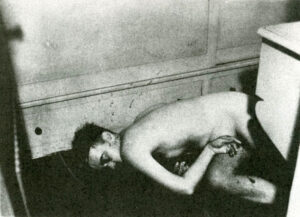
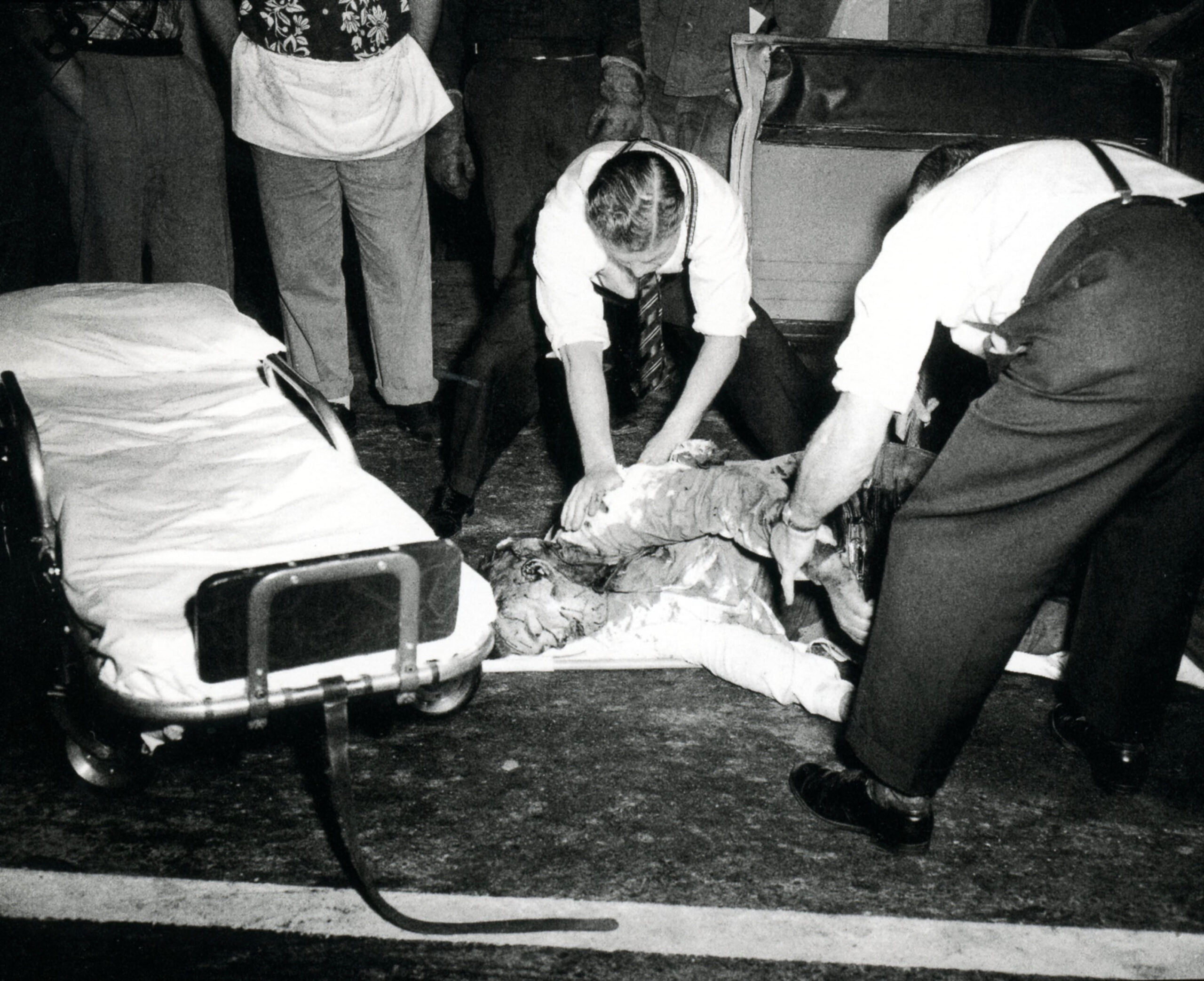
04-10-1951, Burglary suspect.  Case information unavailable.

I just love this photo – from an aesthetic perspective.  Look at that guy’s face, grappling with the consequences of a bad decision.  

Culled from: Scene of the Crime


Garretdom!

Both Officer and Prisoner Will Die.

ATCHISON, Kan., Sept. 13.—Officer Basket, a colored policeman, was sent yesterday afternoon to arrest a negro. Henry Harrington, who was creating a disturbance on Santa Fe street. On reaching the spot Basket found his man on a four foot bridge over a gully, and he resisted arrest. In the struggle which ensued Harrington was knocked off the bridge into the gully, and Basket started after him. Harrington shouted, “If you come down here I’ll shoot,” and as Basket pressed on Harrington fired, the ball striking the officer in the left side. Basket then drew his revolver and fired at Harrington, shooting him in the right nipple. Basket then closed with him and struck him several times on the head with his pistol. At this juncture Superintendent Carpenter, of the street car line, and W. C. Moxie were attracted by the firing, and arrived just in time to catch Basket, who fell to the ground from the effects of his wounds. Harrington was also lying on the ground insensible. Basket was taken to a drug store and thence to his home, where an examination showed that the ball entered below the heart and ranged upward into the left lung. He cannot recover. Harrington was taken to the calaboose, where it was found that in addition to the wound in the breast the skull had been fractured by the officer’s revolver. The doctor pronounced his wounds mortal. Basket has a large family. Harrington is a drunken and shiftless character.

Culled from the collection of The Comtesse DeSpair
1886 Morbid Scrapbook

My new album will be entitled, “A Drunken and Shiftless Character”. 

MFDJ 6/21/25: Today’s Purple Yet Truly Morbid Fact!

Today’s Unassuming Yet Truly Morbid Fact!

The University of Evansville is a small, Methodist-affiliated school with about 3000 students. The quiet, unassuming little school in southern Indiana has a reputation for straightness; even as the storms of the ‘60s washed over campuses from Cal to Columbia, Evansville reportedly retained a disturbingly traditional all-American collegiate atmosphere, complete with a viable, popular fraternity and sorority system. And much of this campus spirit revolved around the pride of Evansville: the Purple Aces basketball team.

The Aces weren’t just an obscure team of an obscure institution; they were a small-college powerhouse. They rampaged through the little world of NCAA Division II much like perennial powers like UCLA and Kentucky did in Division I. For years, the purple juggernaut routinely crushed its fellow small colleges. And when the end of the year rolled around, more often than not, they were in the Division II tournament. This Valhalla of two-bit college basketball weas held at Evansville’s home court from its founding in 1957 through 1976. The trophy frequently didn’t leave the building. The Purple Aces had (most ungraciously for a host!) won the title five times. They were the only team to win twice in a row—a feat they’d pulled off twice!


1958-1959 National Champion Purple Aces

The year was 1977. The Division II tournament had been relocated to the basketball fountainhead of Springfield, Massachusetts. And so was Evansville; they’d made the jump to the big-time world of Division I, visions of a trip to the big Tournament dancing before the athletic department’s eyes. Sweet 16? Final Four? Ah, the glory that could be theirs!


1977 Evansville Purple Aces

But this inaugural campaign in the world of semi-professional basketball was not going well for the Aces. On the night of December 13, they were 1-3, hardly the start of a tournament year. The team mood was grim as they shivered in the rain and the fog at Dress Regional Airport, awaiting their charter to fly them down to Nashville for a game with Middle Tennessee State. Further compounding the gloomy atmosphere was the fact that their chartered DC-3 was late. It was a somber moment in a somber season that would be over far, far sooner than anyone expected.

When their plane finally arrived three hours late, the team and its entourage hastily piled on—according to one account, the plane didn’t even spend 10 minutes on the ground. The pilot quickly taxied onto the runway, wheeled about, and began to take off. All seemed well as the plane hurtled down the tarmac and gathered speed. But as it left the ground, the plane’s nose pitched up at a steep angle. The pilot frantically struggled to regain control of the craft and gain altitude, but in vain. The plane smashed into a wooded ridge two miles from the runway and burst into flames.

Rescuers arriving on the scene found a sea of mud. The impact had broken the plane into three sections, crowning the ridge with the largely-intact tail section and strewing “equipment, duffel bags, and college letter jackets” and, no doubt, deflated basketballs and pieces of players all over the hillside. Only two people survived the initial impact, and they wouldn’t live to see the hospital. In all, 29 people died. Heading the list was the Purple Aces’ entire 14-man roster, the first American team ever to be wiped out en toto. Also killed were the plane’s three-man crew, two officials of the charter company, and the team’s coach and trainer. The balance of the list was a nice cross section of the pond scum that always beefs up SMTDs: two student managers, the assistant athletic director, a sportscaster, two fans (no doubt major benefactors of the athletic department!) and the college comptroller. Presumably the team planned to get their full share of the gate.

Even as workers dug pieces of Purple Aces out of the mud and loaded them onto a rail flat car, rumors flew around the campus. Students descended upon the campus chapel. And as the rumors gradually coalesced into cold, hard facts, a palpable sense of grief washed over the campus. The basketball season was over.

Within a week, parents of the victims had filed a pair of $7 million lawsuits. One charged the plane was “negligently maintained, serviced, and operated and overloaded at take-off.” The preliminary investigation revealed that, while it wasn’t overloaded, they cut it pretty close. The plane had been only 148 pounds under its 29,900 pounds limit at takeoff. The NTSB concluded that the overloaded rear luggage compartment contributed to the crash. But the real cause was the control locks on the plane’s rudder and right aileron—some idiot had forgotten to take them out!!

But the true endnote to the Purple Ace crash came less than two weeks later. Freshman basketball player David Furr had been sitting out the season with an ankle injury. He’d earned his keep by keeping statistics at home games, but didn’t go on the road, no doubt to free up a seat for a well-heeled booster club member. Over Christmas break, while returning with his brother from watching his high school alma mater win a holiday basketball tournament, he lost control of his car on an icy patch of pavement and skidded into a truck. Both boys were killed. The Purple Aces rebuilding program truly had to start from scratch.

Culled from: Murder Can Be Fun #18 by John Marr

This You Tube video has some interesting footage from the crash site, though the sound is trashed.


Lynching Photo Du Jour

Lynching circa 1910 – location unknown.

Culled from: Without Sanctuary: Lynching Photography in America

Garretdom!

The Boys Who Bathed Too Much.

Dr. Leffman reported to the Board of Health on Saturday that he had examined the bath-house at Twenty-seventh and Master streets [Philadelphia] and found that the lads who were taken ill after visiting the bath had been taken sick by remaining in the water too long or bathing too frequently. He recommended that the supply-pipe be removed from its present location near the outlet-pipe to the southern end of the tank. The recommendation was ordered to be carried out. the boys are said to be improving, but two are still in a critical condition.

Culled from the collection of The Comtesse DeSpair
1886 Morbid Scrapbook


MFDJ 06/16/25: Mrs. Devlin’s Dirty Deed

Today’s Eccentric Yet Truly Morbid Fact!

On January 6, 1947, readers of the Newark (Ohio) Advocate were exposed to one of the most gruesome stories to ever hit the front page. Two weeks earlier, Mrs. Laura Belle Devlin of King Avenue murdered her husband of 40 years.

Postman Wilford D. Butcher normally saw Mr. Tom Devlin, 72, while making his rounds. Both Mr. and Mrs. Devlin were considered eccentrics by neighbors, but Mr. Butcher thought it was strange that he hadn’t seen Mr. Devlin during his deliveries.

Mrs. Devlin claimed that he had gone to Philadelphia to visit relatives. She showed a neighbor a letter that was supposedly from her husband’s cousin in Philadelphia; she later showed it to the postman, who noticed that there was no stamp and the postmark was drawn by hand. Mr. Butcher ended up escorting her to the police station himself.

After she arrived, the letter was examined. It read that Mr. Devlin was dead, had already been buried, and the rest of his family was returning to Ireland, where Mr. Devlin’s family was from originally. Soon Mrs. Devlin was recounting her story; she was very cooperative with officials and easily told her version of what she had done and why.

She told authorities that she pummeled Mr. Devlin to death with her fists after he threw a dish at her. She dismembered his body with a sickle and saw, throwing pieces in both the kitchen wood stove and the living room coal stove to dispose of the evidence. In defense of her actions, Mrs. Devlin claimed that her husband had threatened to kill her time and time again.

When taking her fingerprints, she asked them not to hurt her hands by pressing too hard. She also didn’t want to take off her stocking cap for the photos as her “hair was a mess” (she eventually relented).


“That’s the last dish you’ll ever break!”

After the confession, Coroner G. W. Sapp returned a verdict of “homicide due to senile dementia.” On March 11, Mrs. Devlin was committed to Lima State Hospital, where she was declared insane. She died at Lima from pneumonia in March, just seven days after she was committed and approximately two months after she killed her husband.

Culled from: The Newark Advocate

If I were a transwoman, I’d be changing my name to Laura Belle Devlin for sure!  Also, I like the following newspaper article – it summarizes the murder in fine style!

Old Lady Who Collects Lace Admits She Butchered Mate

NEWARK, O.—Laura Belle Devlin, 72, who collects old lace, was held without charge today in the handsaw slaying of her husband whose dismembered body was found scattered in the backyard of their home here.

Police Chief Gail Christman said the mild-mannered little woman told him she cut up 75-year-old Thomas Devlin last week in the parlor of their modest two-story house.

“He tried to kill me so many times that I decided to end his life,” Mrs. Devlin was quoted as saying calmly.

Describes Slaying

“And now can I go home” she asked the police chief after describing in detail how she first pounded Devlin into unconsciousness with her fists and tried to break his bones with a sickle. She then used the saw to dismember the body, Christmas quoted Mrs. Devlin as saying. Burned parts of the body also were found in a stove, Christman stated.

Told she must remian in the Licking county jail, Mrs. Devlin shook her head but made no protest.

Clad in a stocking cap and an old coat, Mrs. Devlin went to police headquarters yesterday with a letter reporting that her husband had died in Philadelphia. Signed “Tom’s cousin,” the letter said: “We are going to Ireland” to bury him. The envelope bore no stamp and had a postmark which was drawn in black ink.  [She tried her hardest. – DeSpair]

Christman and Coroner George Sapp went to the Devlin residence to investigate. There they found parts of a body in the backyard and in an adjoining field. In six other places, they discovered piles of human ashes, including several pieces from a human skull.

Readily Admits Slaying

Confronted by the findings, Mrs. Devlin readily admitted the slaying, Christman said and quoted her as telling this story:

She first tried to kill Devlin with a small kitchen knife, then beat him senseless. As she hacked at his body with the sickle, the blade broke. She found the saw and began dissecting the body on the living room rug. She tossed parts into the coal stove.

Asked why she didn’t call an undertaker, Mrs. Devlin told Christman:

“I’m awfully sorry I didn’t do that.”

Old age pensioners, Mr. and Mrs. Devlin lived in the small house for 20 years. He had come here from Pittsburgh.

Police found the old lace collection, several barrels of sugar and many articles of unused clothing in the house.

The Ann Arbor News, January 6, 1947


Vintage Crime Photo Du Jour!

The scene is a coroner’s inquest in Hutchinson, Minnesota, convened after a 26-year-old farmer named Arthur Melichar went berserk one morning and started shooting people. His lethal weaponry — two shotguns and a rifle — lie atop a desk where the McLeod County coroner and attorney are seated. They’re questioning a young witness to the mayhem as the Hutchinson police chief and county sheriff stand in the background.

Everyone in this photograph looks grim, and with good reason, since the crime was one of the worst in the county’s history. By the time police cornered Melichar in a granary and lobbed in tear gas to subdue him, he’d killed his mother, his bedridden brother, and a 16-year-old boy who — by a stroke of terrible luck — happened to be driving past the farm on his way to school. Melichar also critically wounded another man and set fire to buildings and vehicles on his farm before he was finally taken into custody after a brief gun battle with authorities.

As with so many news photographs of the time, what is remarkable here is how close the viewer seems to the workings of the criminal justice system. Even today’s televised coverage of court proceedings rarely achieves the sense of intimacy this photograph provides.

Justice moved swiftly in the 1950s. Less than a month after the murders, Melichar was declared legally insane and committed to the state hospital at St. Peter.

Culled from: Strange Days, Dangerous Nights


Garretdom!

Both Officer and Prisoner Will Die.

ATCHISON, Kan., Sept. 13.—Officer Basket, a colored policeman, was sent yesterday afternoon to arrest a negro, Henry Harrington, who was creating a disturbance on Santa Fe street. On reaching the spot Basket found his man on a four foot bridge over a gully, and he resisted arrest. In the struggle which ensued Harrington was knocked off the bridge into the gully, and Basket started after him. Harrington shouted, “If you come down here I’ll shoot,” and as Basket pressed on Harrington fired, the ball striking the officer in the left side. Basket then drew his revolver and fired at Harrington, shooting him in the right nipple. Basket then closed with him and struck him several times on the head with his pistol. At this juncture Superintendent Carpenter, of the street car line, and W. C. Moxie were attracted by the firing, and arrived just in time to catch Basket, who fell to the ground from the effects of his wounds. Harrington was also lying ont eh ground insensible. Bsket was taken to a drug store and thence to his home, where an examination showed that the ball entered below the heart and ranged upward into the left lung. He cannot recover. Harrington was taken to the calaboose, where it was found that in addition to the wound in the breast the skull had been fractured by the officer’s revolver. The doctor pronounced his wounds mortal. Basket has a large family. Harrington is a drunken and shiftless character.

From what I can tell, they both survived. – DeSpair

Culled from the collection of The Comtesse DeSpair
1886 Morbid Scrapbook


MFDJ 06/11/25: More Radium Girl Tragedy

Today’s Necrotic Yet Truly Morbid Fact!

The Radium Girls were female factory workers who contracted radiation poisoning from painting radium dials – watch dials and hands with self-luminous paint. The incidents occurred at three factories in United States: one in Orange, New Jersey, beginning around 1917; one in Ottawa, Illinois, beginning in the early 1920s; and one in Waterbury, Connecticut, also in the 1920s.

After being told that the paint was harmless, the women in each facility ingested deadly amounts of radium after being instructed to “point” their brushes on their lips in order to give them a fine tip;  some also painted their fingernails, faces, and teeth with the glowing substance. The women were instructed to point their brushes in this way because using rags or a water rinse caused them to use more time and material, as the paint was made from powdered radium, zinc sulfide (a phosphor), gum arabic, and water.

Five of the women in New Jersey challenged their employer in a case over the right of individual workers who contract occupational diseases to sue their employers under New Jersey’s occupational injuries law, which at the time had a two-year statute of limitations, but settled out of court in 1928. Five women in Illinois who were employees of the Radium Dial Company (which was unaffiliated with the United States Radium Corporation) sued their employer under Illinois law, winning damages in 1938.

Here is the sad story of three of the Radium Girls.

It was the Roaring Twenties – but Grace Fryer wasn’t in the mood for dancing. It was odd: she had this slight pain in her back and feet; nothing major, but enough to make it uncomfortable for her to walk. Dancing definitely wasn’t on the agenda, even though the girls at the bank were still throwing their parties.

She tried to put it to the back of her mind. She’d had a few aches and pains the year before, too, but they came and went; hopefully, when these latest aches cleared up, they would simply go for good. She was just run-down, she reasoned: “I thought that this was merely a touch of rheumatism and did nothing about it.” Grace had far more important things to think about than an achy foot; she’d been promoted at work and was now the head of her department.

It wasn’t just an achy foot troubling her, however. Back in January, Grace had gone to the dentist for a routine checkup; he’d removed two teeth and, although an infection had lingered for two weeks, her trouble had then cleared up. But now, six months on, a hole had appeared at the site of the extraction and was leaking pus profusely. It was painful, and smelly, and tasted disgusting. Grace had health insurance and was prepared to pay to get it sorted out; the doctors, she was sure, would be able to fix her trouble.


Grace Fryer

But had she known what was happening just a few miles away in Newark, she might have had reason to doubt her faith in physicians. Grace’s former colleague Irene Rudolph was still paying doctor after doctor to treat her—but without relief. She had by now undergone both operations and blood transfusions, but to no avail. The decay in Irene’s jaw was eating her alive, bit by bit.

She could feel herself weakening. Her pulse would pound in her ears as her heart beat faster to try and get more oxygen around her severely anemic body—but although her heart was drumming faster and faster, it felt to her like her life was inexorably slowing down.

In Orange, for Helen Quinlan, the drumbeat suddenly stopped.

She died on June 3, 1923, at her home on North Jefferson Street; her mother Nellie was with her. Helen was twenty-two years old at the time of her death. The cause of it, according to her death certificate, was Vincent’s angina. This is a bacterial disease, an agonizing and progressive infection that begins in the gums and steadily spreads until the tissue in the mouth and throat—swollen and ulcerated—finally sloughs off, dead. Her doctor said he didn’t know if the disease was confirmed by laboratory tests, but it was written on her death certificate, nonetheless.

The “angina” in its name is derived from the Latin angere , meaning “to choke or throttle.” That’s what it felt like when the decay in her mouth finally reached her throat. That’s how Helen died, this girl who had used to run with the wind in her skirts, making boyfriends gaze and marvel at her zest for life and her freedom. She had lived an impossibly short life, touching those who knew her; now, suddenly, she was gone.

Six weeks later, Irene Rudolph followed her to the grave. She died on July 15, 1923 at twelve noon, in Newark General Hospital, where she’d been admitted the day before. She was twenty-one. At the time of her death, the necrosis in her jaw was said to be “complete.” Her death was attributed to her work, but the cause was given as phosphorus poisoning, a diagnosis admitted by the attending physician to be “not decisive.”

Culled from: Radium Girls


Torture Implement Du Jour!

Maiming Stork

Its name is probably suggested by its shape, which resembles that of a stylized stork, its bottom portion being larger than the top, which was used to immobilize the head of the victim.

This was a device of bondage and restraint that inflicted suffering by immobilizing the victim’s neck, wrists and ankles, all at the same time. Without any possibility of movement, the victim suffered a far greater and quicker escalation in psychological damage compared to the actual damage inflicted on the muscles, due to numbness of immobilized limbs.

The name “crippling stork” is attributed to Lodovico Antonio Muratori, an historian and a very important figure in Italian Enlightenment, who mentioned it in the “Annali d’Italia”, in the mid-1700s. The base of the triangle consisted of a rod that acted both as a support to constrain the victim’s wrist and as a means of constraint for the legs, which were completely immobilized, with bent knees, thus making any movement impossible.

Culled from: Torture – Inquisition – Death Penalty


Garretdom!

A Notorious Moonshiner Killed.

NASHVILLE, Sept. 14.—A notorious moonshiner named Chenault was shot and instantly killed at Etna Sunday morning. A party of men employed at the furnace were having their Saturday night spree, and several of them had gone to Chenault’s place and bought half a gallon of liquor. When this was disposed of they bought another gallon and drank that. As they did not return, Chenault came to the cabin where they were and offered to sell them more, which H. McKey, as spokesman of the party, declined, asserting that the last lot was not as good as the first half gallon and made them drunk. Chenault responding that the truth was they were just too poor to buy any more, turned to leave, when McKey drew a revolver and shot him through the brain. He died without a word. McKey fled to the woods and has not been seen since. Both were young men, neither over twenty-five. The verdict of the Coroner’s jury was murder. Neither had any family . Chenault was regarded as a leader in the gang of moonshiners in that wild section.

I couldn’t find out whether McKey was ever captured.  

Culled from the collection of The Comtesse DeSpair
1886 Morbid Scrapbook

MFDJ 04/19/25: A Ghastly Scene at New London

Today’s Zombie-like Yet Truly Morbid Fact!

The New London School explosion occurred on March 18, 1937, when a natural gas leak caused an explosion and destroyed the London School in New London, Texas, United States. The disaster killed more than 300 students and teachers. As of 2021, the event is the third-deadliest disaster in the history of Texas, after the 1900 Galveston hurricane and the 1947 Texas City disaster.  The following is an account of the aftermath of the disaster.

Preston Crim saw a man emerge from the ruins carrying a schoolboy. “Evidently he was one of the first on the scene and he found his son the first thing,” Crim said. “I could see [the son’s] feet dangling—turned different directions like his legs were crushed. His abdomen was opened up and his intestines were hanging and he was still alive, begging his daddy to kill him. His daddy was just walking like a zombie in a trance.”

Culled from: Gone at 3:17


Morbid Portrait Du Jour!

Philadelphia Medical Student
1/6 Plate Ambrotype, circa 1858

Classic photographic background used in Philadelphia.

Culled from: Stiffs, Skulls & Skeletons


Garretdom!

TWO BROTHERS DROWNED.

And Their Mother, Who Saw Them Go Down, Becomes a Raving Maniac.

LITTLE ROCK, Sept. 15.—A most sad case of drowning occurred in this county, near the residence of Joseph Morse, yesterday afternoon. The twelve-year-old son of Mr. Morse was bathing in a pond near the house at the time, when he was suddenly taken with cramps, and called to his brother Henry, who was standing upon the bank , to save him. Henry sprang into the water to aid his brother, but the latter’s weight in addition to that of his own clothing proved too great, and they both sank never to rise again. Mrs. Morse had run from the house when the first warning was given, and witnessed the death of her two sons. She fainted at the sight, and when restored to consciousness it was found that she had lost her reason, and had become a raving maniac.

Culled from the collection of The Comtesse DeSpair
1886 Morbid Scrapbook

MFDJ 04/01/2025: Corrosive Suicide

Today’s Corrosive Yet Truly Morbid Fact!

The swallowing of corrosive poisons—acids, alkalis and metallic salts—causes a particularly unpleasant kind of death. These agents erode and destroy the tissues with which they come into contact. Death from corrosive poisoning is commonly the result of suicide or accident. The ready availability of compounds such as metal polishes, bleaches, toilet cleansers and disinfectants make them convenient agents for suicide. The widespread industrial use of corrosive materials, also increases the dangers of accidents.

The destructive nature of the mineral acids has led to their criminal use in disfigurement and in the disposal of bodies.

When a corrosive is swallowed the tissues in contact with it are in some measure destroyed: the victim feels a burning sensation in the mouth and throat, and there is intense stomach pain: this is followed by vomiting of shreds of blood-stained material, accompanied by intense thirst. Choking is common, and the air passages will probably be congested, especially if the poison is volatile, such as ammonia or fuming acid.

There will be signs of corrosion around the mouth and lips—grey or brownish stains. Consciousness is usually of color as respiration breaks down, and death usually follows within a few hours of a fatal dose, and results from a combination of shock, extensive tissue damage and respiratory failure. Post-mortem examination will show the destruction of those tissues affected by the corrosive. The extent and coloration of damage will identify the agent used if that is in doubt.

Hydrochloric Acid and Sulfuric Acid –> Grey/black
Nitric Acid –> Red/brown
Caustic alkalis –> Grey/white
Cresols –> Brown
Mercury Chloride –> Blue/white

Some corrosive agents have a double effect—attacking the tissues directly and also acting on the central nervous system: such poisons are carbolic acid and oxalic acid. Carbolic acid in its pure form is phenol, and is used as a component in many branded disinfectants. These agents have a corrosive action which is partly modified by their anesthetic effect—vomiting is therefore uncommon. But they also have a depressant action, and death usually results within about three hours from respiratory or cardiac failure; a fatal dose may be as low as 4 ml. but recoveries have been recorded from much higher doses. Phenol may also be absorbed through the skin.

Sulphuric acid—Oil of Vitriol—is one of the strongest corrosive poisons. It is used extensively in its most concentrated form for industrial purposes and also in laboratory work, but battery acid (30% sulphuric acid) is still sufficiently strong to cause corrosive poisoning. Sulphuric acid acts by extracting water from the tissues and, in the process, generates considerable heat. This has a charring and blackening effect. Perforation of the esophagus and stomach is likely to follow this.


Accidentally inhalation of sulphuric acid

Hydrochloric and nitric acids give off irritant fumes and therefore involve the respiratory system. Their destructive effects are less severe than those of sulphuric acid.

The principle alkaline corrosive poison is ammonia. It has an intensely irritating vapor and usually involves the air passages; it is commonly used in suicide and is frequently taken by accident. Many cleaning fluids contain ammonia in large proportions. The choking fumes of concentrated ammonia may cause cardiac failure, and they are particularly dangerous when inhaled, as they dissolve in the mucous membranes, thereby prolonging their action.

Culled from: Crimes and Punishment, the Illustrated Crime Encyclopedia #1


Post-Mortem Portrait Du Jour!


Baby Bundled in Paisley Quilt
Ambrtotype 1/6 Plate, Circa 1862

Culled from: Sleeping Beauty III


Garretdom!

A Madman’s Horrible Deed.

TROY, N. Y., Sept. 19.—Dexter P. Wager, a farmer at Cropseyville, this county, has for a week past manifested signs of insanity. Yesterday morning he drove his wife and mother-in-law from the house. When they returned it was found that Wager had cut from ear to ear the throat of his daughter, aged three years. After a struggle the madman was secured and committed to jail.

Culled from the collection of The Comtesse DeSpair
1886 Morbid Scrapbook

MFDJ 03/20/25: The First Bison Fatality

Today’s Ripped Open Yet Truly Morbid Fact!

Marvin Lesley Schrader, 30, of Spokane, Washington, became Yellowstone’s first bison fatality on July 12, 1971, at Fountain Flats north of Old Faithful. Schrader, his wife, and three children spotted a solitary bull buffalo lying down in a meadow just east of Rush Lake that day. Schrader walked to within twenty feet of it to take its picture. The one-ton bison stood up, charged Schrader, and tossed him more than twelve feet. The animals’ horns ripped open the man’s upper right abdomen, and pierced his liver. With a large hole in his side, Schrader attempted unsuccessfully to rise onto one elbow, then lay on the ground groaning for a few minutes while his wife and children watched him die. Mrs. Bonnie Schrader admitted later that they had been too close to the bison. In the family’s possession was the park’s read “Danger” pamphlet that warned of wild animals.

Culled from: Death in Yellowstone


Civil War Injury Du Jour!

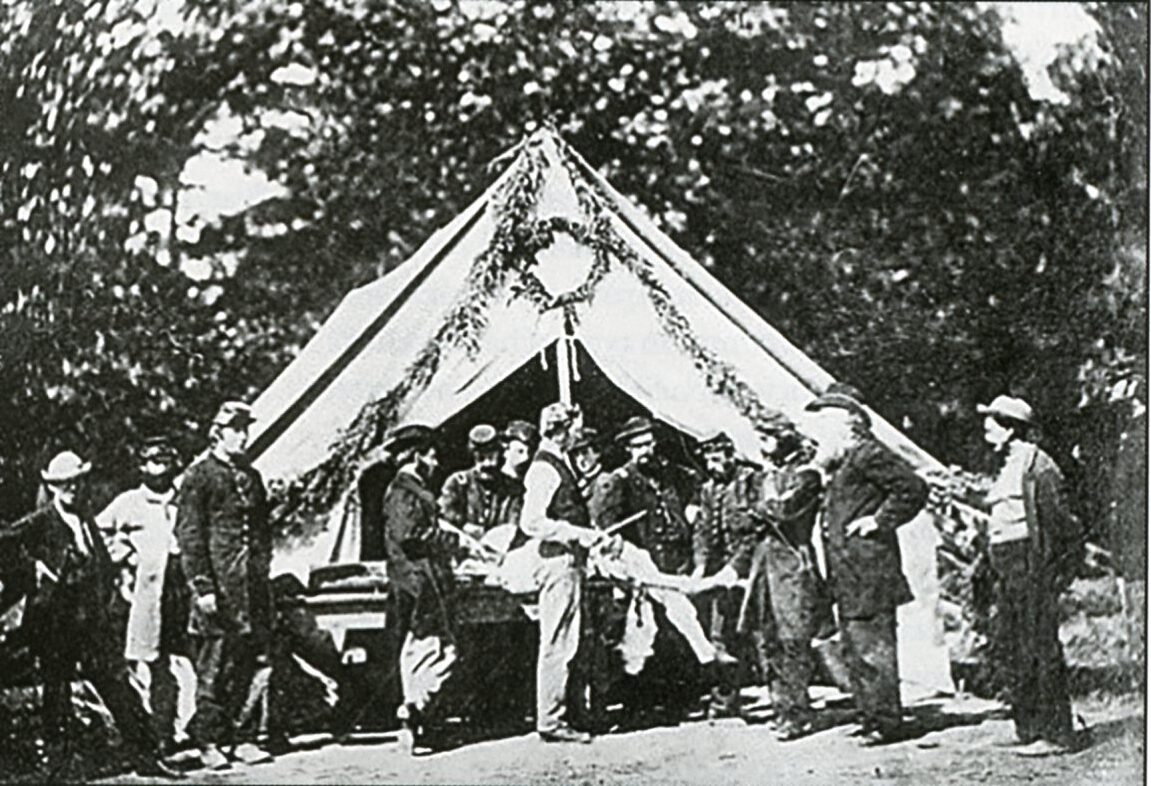
G. Porubsky, Co. B. 46th NY volunteer displaying excision of humerus. This photograph from Bontecou’s teaching album shows the drawn-in suspected path of the bullet. Bontecou’s operation of bone removal in the upper arm left the patient with a useless limb. Many were amputated in the antiseptic surgical era of the 1880s.

Culled from: Shooting Soldiers: Civil War Medical Photography by R.B. Bontecou


Garretdom!

COULD NOT LEAVE ETHEL.

A Mother Drowns Her Little Daughter and Then Hangs Herself.

The Shocking Tragedy that Broke Up a Happy Home in Brooklyn and Drove a Fond Husband and Father Almost to the Verge of Insanity.

NEW YORK, Sept. 19.—A shocking domestic tragedy occurred yesterday at 438 Monroe street, Brooklyn, the residence of Wm. H. Hubbell, the Adjutant of the Forty-seventh Regiment, and for nearly twenty years an employee in the dry goods commission-house of Van Valkenburg & Co. in Worth street, near Church, in this city. Mr Hubbell, his wife Annie, aged thirty-six years, his seventeen-year-old crippled son George, and his seven-year-old daughter Ethel composed the little household. Mrs. Hubbell, although for some time in rather delicate health, attended to her own house-hold duties, and no servant was employed. According to the stories of relatives and neighbors Mr. Hubbell was a kind husband, and the relations between him and his wife had always been harmonious. Last night he was suffering from a shock which almost deprived him of his reason.

During his absence at business yesterday his wife sent her crippled son to his grandmother’s house in Greenpoint, summoned her daughter Ethel from play with some other children in front of the house, stripped her naked and drowned her in the bath tub, and then hanged herself from the bath room door.

Mr. Hubbell made the shocking discovery when he returned home about five o’clock. He was surprised on reaching the house to find all the windows closed and the blinds drawn down. This was unusual, as his wife and blue-eyed little daughter generally sat at the basement window every evening awaiting his return from business and greeted him with kisses. On ascending the stoop and opening the front door he found a note in the vestibule. The envelope bore his name and this significant warning: “Do not come in alone.”

The writing was in pencil, and he recognized it as his wife’s. He was much alarmed especially when he tried to open the inside door with his latch key and found it bolted. Tearing open the envelope and throwing it aside he read the contents of the note. It informed him that his wife had determined to end her life, and that she could not find it in her heart to leave Ethel behind her. She bade her husband a sad farewell and begged him to forgive her of the act, and to remember her kindly. With terrible apprehensions of what had taken place Mr. Hubbell burst open the door and after searching in vain for his wife and the children, rushed upstairs. In the little bath-room, between the front and back rooms, on the second floor he found his wife dead suspended by the neck from a hook on the back of the door, and with her face pressed against the door, and her feet almost touching the ground. Little Ethel had drowned face upward, in the bath-tub which was almost filled with water.

The spectacle appalled him, and he rushed from the house to the residence of his brother-in-law on Quincy street, a few blocks distant. He sent a messenger for Mr. George C. Jaffreys, the family physician….

Everything indicated that both the murder and the suicide were deliberate. About noon Mrs. Hubbell kissed her son and told him to go to his grandmother’s house in Greenpoint and remain there until his father went for him. About one o’clock she called to Ethel, who was playing with some children on the opposite side of the street.

“Come in, Ethel, I want to give you a bath before you go to your grandmother’s.”

Ethel hurried across and entered the house with her mother, who was noticed a few minutes later by one of the neighbors closing the windows and pulling down the blinds in the front of the house. The children’s clothes and hoses were carefully laid at the foot of the bath tub, and the little one was evidently conscious until the last moment of her mother’s intention. Marks on her neck indicated that she had been forcibly held under the water until the mother was satisfied that she was dead. A flatiron was found in the bath-room, and it is supposed to have been used by the mother in keeping the body under the water. In taking her own life Mrs. Hubbell had tied one end of a piece of clothes line around the top binge of the door and fastened the other around her neck, adjusting a large knot under the left ear. She then twisted the slack of the rope around an iron hook several times until her feet were raised from the ground and thus strangled herself to death. Her face was much contorted. She wore a calico wrapper and slippers. She was a small woman of delicate appearances, and she could not have weighed more than ninety or ninety-five pounds. She had been in poor health for some time and frequently she suffered from fits of despondency, caused as it is supposed, through sympathy for her crippled son. She has never, however, threatened suicide, and the tragedy was a startling surprise to all her relatives and friends. She was married when she was eighteen years old, and until a few years ago was of a cheerful disposition. Dr. Jaffreys said last night:

“I have been Mr. Hubbell’s family physician for some time, and have known that Mrs. Hubbell’s health has been a cause of great anxiety to him. She suffered mentally as well as physically for several months, but there was nothing in her condition in either respect to excite any special claim. I have no doubt that she committed this act while she was suffering from emotional insanity. Her husband, I know, was kind an affectionate, and this morning while leaving the house his wife, he tells me, kissed him, and told him to come home as early as possible. Little Ethel was a bright, blue-eyed, brown-haired girl and was a great favorite with the children in the neighborhood.”

Culled from the collection of The Comtesse DeSpair
1886 Morbid Scrapbook

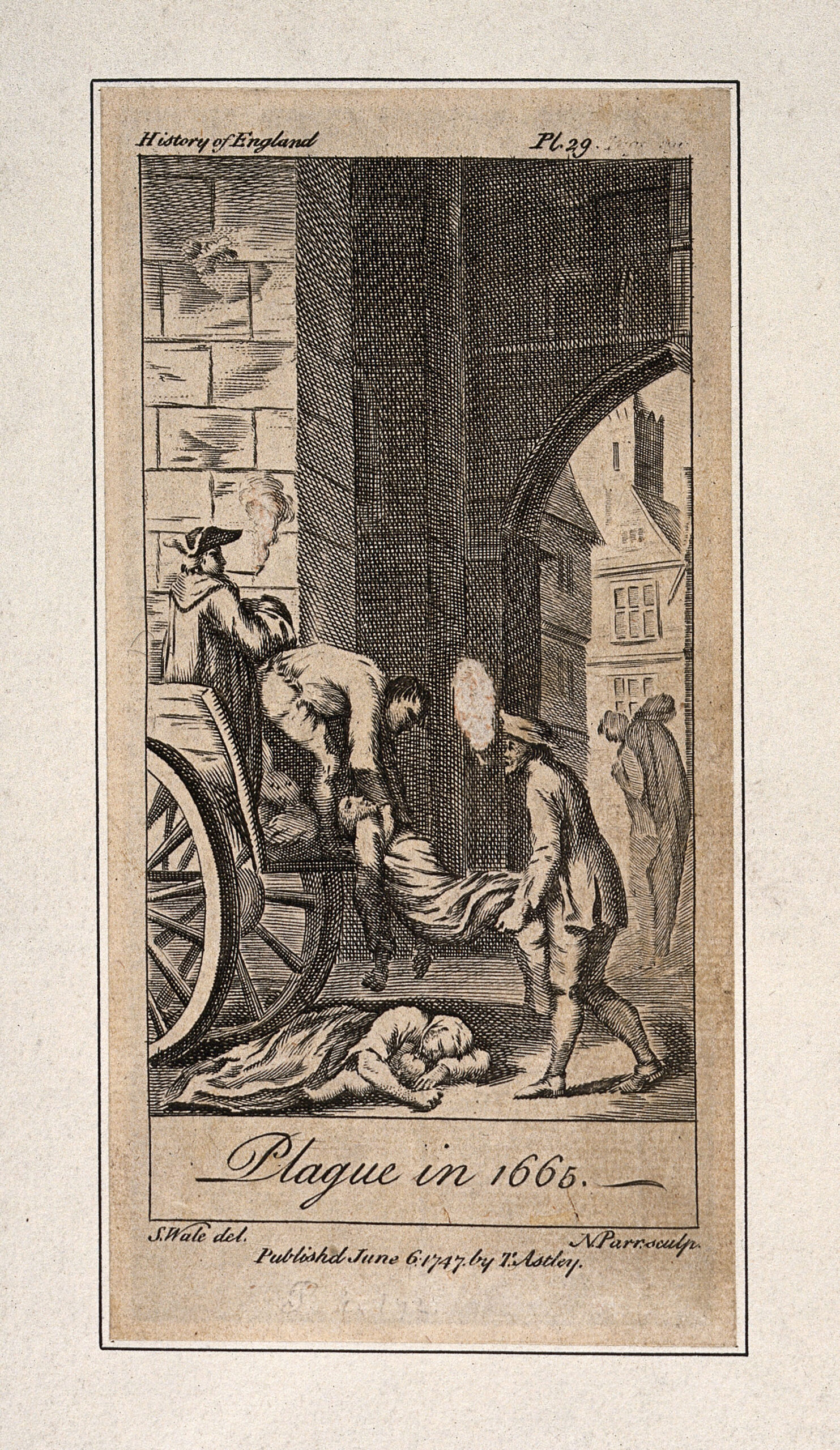
MFDJ 02/15/25: Witch Hunts in Germany

Today’s Horrifying Yet Truly Morbid Fact!

The most horrifying attacks  against “witches” in the 16th century German lands were made in the Catholic territories. Though the new Protestant magistrates also prosecuted for witchcraft, they did not keep up with the prince-bishops and archbishop-electors of the Catholic ecclesiastical lands, executing one witch to the Catholics’ three. At Trier between 1587 and 1593, for example, under the direction of the Jesuit demonologist Peter Binsfeld, 368 witches were burned from twenty-two villages, a hunt so devastating that two villages were left with only one woman apiece. The abbot of Fulda was responsible for the deaths of over 700 witches at the beginning of the seventeenth century. A particularly vicious outbreak occurred at Ellwangen, where 390 person were burned between 1611 and 1618. The Teutonic Knights ordered the deaths of 124 in just two years, 1628 to 1630. In the conventual land of Quedlinburg, 133 witches were executed on one day in 1589. At Eichstätt, 274 person were burned at the stake apparently in one year, 1629.


Peter Binsfeld, what a dick!

The first wave of German trials victimized mainly women of the poor or middling sort, midwives like Walpurga Hausmänin, but as the supply of poor women ran low, accusers turned to women and men of the establishment. The nine hundred person put to death by the prince-bishop of Würzburg, for example, included nineteen of his priests and his own nephew. The archbishop-elector of Cologne ordered the deaths of the wives of his chancellor and his secretary. And at Bamberg the bishop executed six hundred witches, including his own chancellor and the burgermeister. Most grotesque was the execution of forty-one young children at Würzburg, a custom that grew in Germany until most major trials included children as both victims and accusers. These later witch hunters turned to younger victims, to men, and to persons of their own class. This last apparently led to a slackening of the craze (as in Offenburg), as the elite, fearful for their own lives, used their clout to stop the madness.


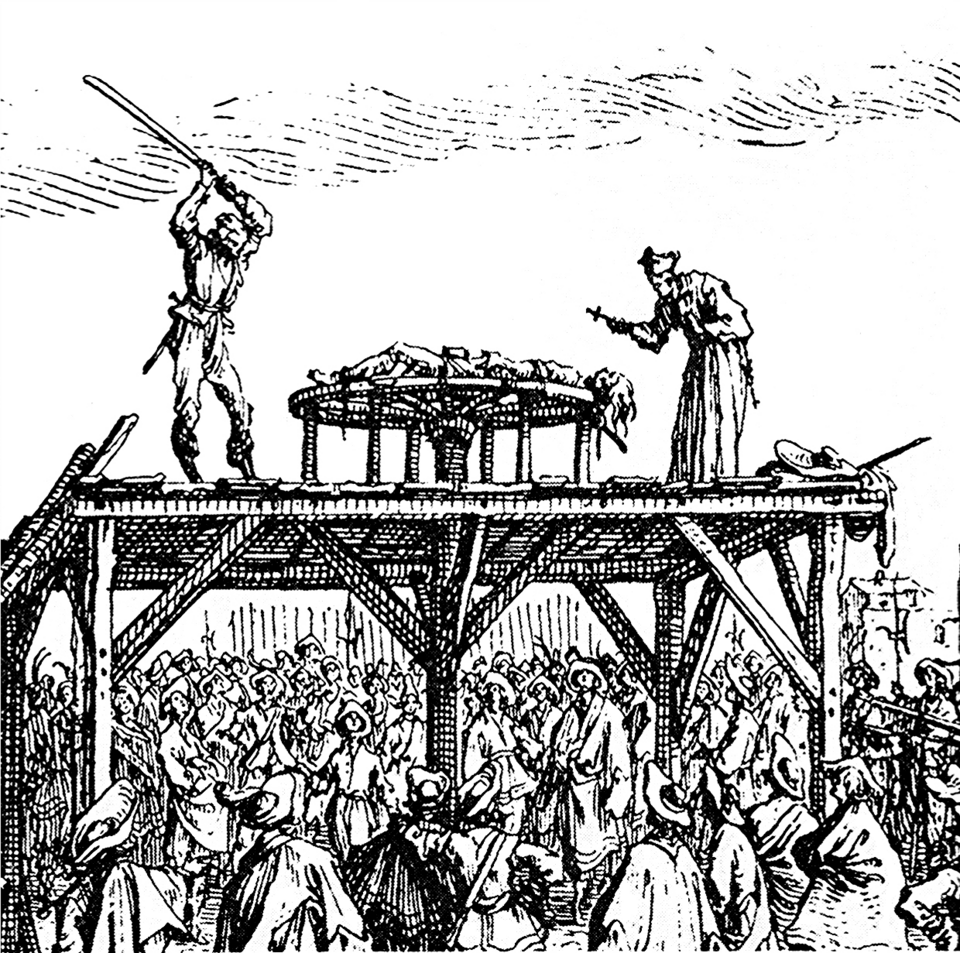
Poor Walpurga’s execution

Culled from: Witchcraze

Post-Mortem Portrait Du Jour!

Boy Rests With Eyes Half Open
Daguerreotype 1/6 Plate, Circa 1848

Culled from: Sleeping Beauty III


Garretdom: Race Riot Edition!

FOUR-MILE-RUN’S TRAGEDY

An Irishman Killed in a Fight, and an Italian Fatally Wounded.

PITTSBURG, Pa., Sept. 19.—Four-Mile-Run, in the Fourteenth ward, was the scene of a bloody race riot at noon to-day, in which two of the participants received fatal injuries. The fight was the result of bad feeling existing among the Irish and Italian laborers who have their abode in that neighborhood. On Saturday night, while Joseph Vernard, an Italian, was on his way home, he was attacked by a gang of Irishmen. There were six in the assailing party, and it is said they were under the leadership of two brothers named Daly. Vernard was terribly beaten, but managed to escape to his home. No more trouble occurred until noon to-day, when a gang of twenty Irishmen called at Vernard’s house and demanded admittance. A number of Italian boarders were in the house at the time, and the doors were quickly barred. The assailants, however, battered the doors down and rushed into the house.

A free fight followed, in the progress of which “Paddy” Rocco, an Italian, had his skull crushed with a chair, and Patrick Constantine, an Irishman, was shot in the abdomen. The sight of the prostrate men seemed to frighten the others, and a general stampede took place, so that by the time the police arrived all had escaped. The wounded men were removed to a hospital, where Constantine died a few hours later. Rocco is still living , but his recovery is considered doubtful. Five of the Italians were arrested this afternoon, but the Irishmen are still at liberty. It is believed that the latter intended to drive the Italians from the neighborhood.

Culled from the collection of The Comtesse DeSpair
1886 Morbid Scrapbook

MFDJ 02/09/25: Disgusting Mouths

Today’s Agonizing Yet Truly Morbid Fact!

The Middle Ages, while not known for many breakthroughs, did succeed in producing some of the most disgusting mouths in the history of the human race. Teeth were at an all-time low: rotting, blackened, cracked, painful.

Sometimes, itinerant teeth pullers in Europe wandered from town to town with a little medicine show, climaxed by the locals watching their brethren writhe in agony while teeth were yanked by long metal pliers. Barbers—along with surgery and hair cutting—did tooth pulling. Remember, there was no local anesthetic.

It’s no wonder the Church did a thriving business in devotional offerings to Saint Apollonia, the patron saint of tooth pain.

According to legend, Apollonia—the daughter of a pagan magistrate in Alexandria, Egypt—decided to convert to Christianity. The young woman was tortured to renounce Christ and return to the Roman gods, but she refused. The authorities started pulling her teeth out one by one. Still, she refused. She died a martyr’s death at the stake. In 300 A.D., she was canonized.

Culled by: An Underground Education


Sexual Deviant Du Jour!

The Sexual Criminal is a 1949 criminology textbook written by infamous Los Angeles County criminal psychiatrist J. Paul De River that is jam-packed with all the sexism and homophobia common to its era.  I thought I’d share some of the case studies with you.

Case Study 110 B.H., age twenty-one, white male; his education consists of two years of high school. He was discharged from the military service for being A.W.O.L., and given a bad conduct discharge. Present occupation: hospital attendant.

Family History: His mother is living and in good health. His father is alive; he thinks he is well, but he hasn’t seen him for about fourteen years. His parents are divorced, mother remarried. There is a negative family history of insanity, epilepsy, and all constitutional diseases.

Past History: He states his health has always been excellent. He has a past criminal record. At the age of sixteen he was arrested for stealing an automobile and was sent to a juvenile boys’ camp for five months. He was arrested at the age of nineteen for grand theft auto, and again at the age of eighteen when he was given forty days in jail and three years suspended sentence. He was then arrested two years ago, and given eighteen months. He was paroled in fifty-two days but violated his parole and served a year in the penitentiary. He drinks, sometimes to excess, uses tobacco, denies the use of narcotics.

His sexual history began at the age of seven with acts of masturbation which occurred intermittently. Shortly after this he permitted an older boy to commit an act of oral copulation on his person. These acts occurred over a period of months at frequent intervals. He indulged also in acts of fellatio. About the age of nine, he was seduced into heterosexual practices by a girl eighteen. These acts were repeated perhaps two or three times. He has had numerous women in his lifetime for sexual intercourse. He has permitted homosexual acts to be practiced on him at various times, mostly for money. While he was in the penitentiary he indulged in homosexual acts. He denies unnatural practices with females. He states that there is no love affair during his homosexual association with men. He claims he indulged in these practices only to get sexual relief, or to receive money.

Somatic Examination: He is well-developed and well-nourished, athletic schizothymic physique, blond hair, gray eyes with heavy bushy brows. His face is egg-shaped with a squared-off chin and dimple. He has an aquiline nose, long neck, and prominent thyroid cartilage. The heart and lungs are negative. There is a good distribution of hair over the body and extremities. The glandular, bony, vascular, and muscular systems are negative. There is a superficial laceration, one inch, base of left scapula, approximately thirty-six hours old. Laceration of right thumb and right index finger, scar inner side of right wrist, one-fourth inch in length. Right anterior surface of right wrist, one-fourth inch scar, dorsal surface of hand at base of thumb. This scar resembles a pin scratch or a fingernail mark. There is a recent scar, posterior surface of penis just behind corona of glans-penis. This also resembles a scratch mark. There is an old healed scar, right upper hip. The genitalia are well-developed. There is a scar on the left upper thigh which was bandaged at the emergency hospital. His pupils are equal and react to light and accommodation. The superficial and deep reflexes are present.

Psychic Examination: He is well orientated as to time, places, dates, and persons. He states that he sleeps well, is not worried, and gets along well with people. He considers himself agreeable and states, “I am the happy type.” He doesn’t think he has any enemies. His wealth of knowledge is good. He performs the test for the opposites correctly and the backward and forward test correctly. He has no delusions, illusions, or hallucinations. His reaction time is prompt. He is not disassociated. He is high-tempered and explosive.

Statements Relative to His Present Offense: The following questions were asked of the subject and the following answers received:

Q: How do you feel about killing Mr. S.?

A: I feel awfully worried, and I didn’t know I was going so far, but I seemed to lose control of myself, and I didn’t know what I was doing until it happened. I just seemed to get excited and did this thing, and I didn’t know that I was killing.

Q: Do you think you are insane?

A: I couldn’t say whether I was nor not.

Q: How do you feel now? Do you think you are sane?

A: I don’t know but I feel I must have been upset. I thought I’d just put him out. I thought he could untie himself. You see, in the hospital where I work, when the patient is a neurotic we take a towel and put it around his neck, and sometimes if he is excited we twist it until he quiets down. I was taught this when I went to hospital school where I was being trained as a hospital attendant, and also in the penitentiary, as I was in the psychiatric ward.

Q: How long had you known the victim?

A: I met him in November. He picked me up. That first night he asked me if I was a movie star, when I told him no, he says well why don’t you go in pictures. I said I had no desire to go in pictures. Well, we drove out and ended up in his home. He asked me in for a drink, but I had another date and didn’t join him, and he let me out at a club house, an actor’s school home. I saw him in December, he phoned and invited me to dinner, and I told him I’d be there about eight-thirty. I had a date that night with a friend, a young lady. I like to dance and she asked me to go to the Palladium with her. This was about seven o’clock. However, I called Mr. S. and told him I’d be by later. Well, I did drop by his place to see him and he was waiting for me. He was alone. He seemed to be disappointed that I didn’t come earlier. After we’d had a few drinks he suggested that I spend the night there, and he’d drive me to work in the morning. We lay there talking and he snuggled up to me and said he couldn’t get warm. Finally he started getting friendly with me and we indulged in mutual masturbation, and he asked me to perform an act of sodomy with him, which I did. After the act was completed I was tired and wanted to go to sleep. In fact I was about asleep when he started all over again and used his mouth on me. Then we went to sleep. Later on in the night he did the same thing. Sometime in the early morning — it was just after I had him make coffee, I started to get up but felt sleepy. Suddenly I woke up and found that the was doing the same thing with his mouth. I got excited and began to scuffle with him, and he fell on the floor and got back up. I reached over and grabbed his privates and he grabbed me, and he hurt me. We began to fight. There was an ash tray on the side of the bed, and I grabbed it and hit him on the side of the head. He fell over the bed, but we continued to scuffle as he got up and I hit him, with my hand, in the face. Finally I hit him on the side of the head, and he fell down on the floor. I picked up a necktie and tied it around his neck. Then I tied his feet. He was still trying to get up, and then I saw my undershirt and I put it around his neck. He just lay there breathing deeply and making a funny gurgling sound. Then I put on my clothes, but I discovered there was blood all over me, and I didn’t continue to dress but took a shower.

Q: Did you know whether you had killed him or not?

A: I don’t know. I didn’t notice. The last I saw him he was breathing and making a sound.


The victim in the case of B.H.

Q: Then what did you do?

A: Well, I finished dressing and I went down to his car. I then took his keys. then I got out of the car, and went back to the apartment. I picked out some of his clothes and took them with me.

Q: Where did you find his car keys?

A: On top of the dresser.

Q: What else did you find?

A: I took a wallet off the dresser.

Q: Did you take any money?

A: I took what was in the wallet — five or six dollars.

Q: Then what did you do?

A: I got in the car, drove to the hospital and talked to some fellows. And it was about time I started to eat lunch, but my hand was cut and bleeding. So I went and got some clothes and told the fellow in charge of the hospital attendants that I was going to San Francisco. Well, I got about as far as Sacramento, and I stayed there for a time, and then I headed back and I was arrested for speeding. When they found out the car didn’t belong to me, anyway, I told them I had been in a fight with a fellow, but that I was taking his car and clothes back to him. They didn’t believe me and that’s why I was arrested.

Q: You do remember tying the necktie about Mr. S.’s neck, don’t you?

A: Yes.

Q: Why did you do that?

A: I tried to get even with him and make him quit.

Q: Did you choke him with your hands?

A: Yes.

Q: Where was he when you put the necktie about his neck?

A: He was lying on the floor.

Q: Did you intend to kill him?

A: Well, I don’t know, but I don’t think so. I just go excited and thought I’d teach him a lesson.

Q: Did you know he was dead when you left?

A: I don’t know. I really found out when I was arrested.

Q: You realize that you have done wrong, don’t you?

A: Yes.

Q: Did you realize that what you were doing was wrong at the time you killed him?

A: Yes, but I was so mad, I didn’t stop to think.

Q: When you got out of the car and went back to the apartment to get your clothes, did you look to see how Mr. S. was?

A: I didn’t notice.


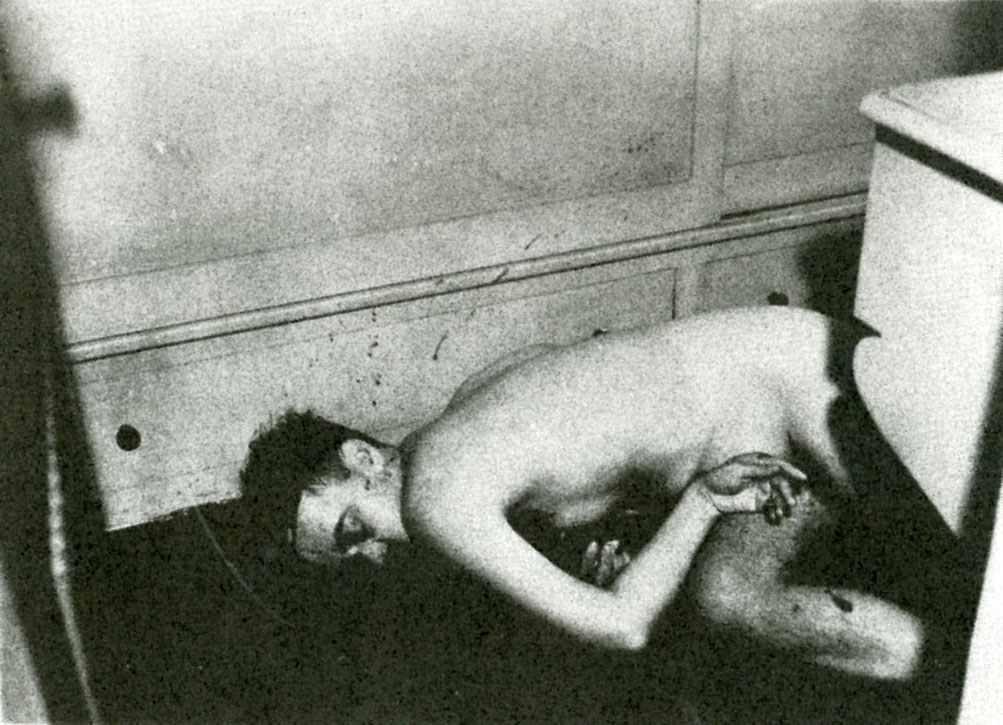
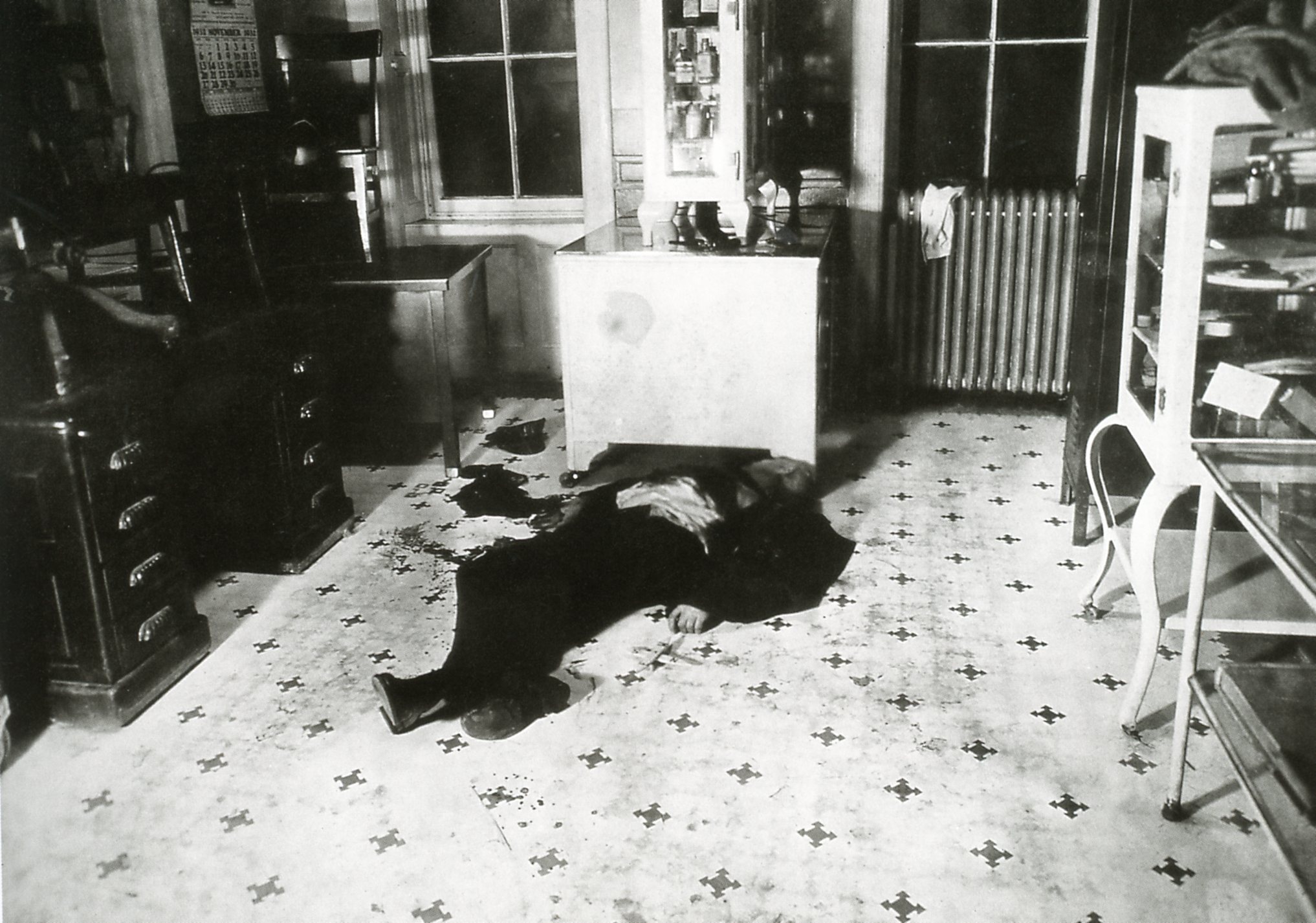
Scene of the crime. Note the condition of room and condition of victim’s body Death resulted from strangulation.

Analysis and Conclusion: B.H. is medically and legally sane. Early environment undoubtedly played a great part in this subject becoming a criminal. We learn that he is from a broken home; his mother, after divorcing his father, remarried. There was undoubtedly no great family tie to either of his parents. He admits that he has not seen his father for fourteen years. At the tender age of seven he began to indulge in acts of masturbation and shortly thereafter he was seduced into perverted homosexual practices by an older boy. This was followed by his introduction into heterosexual relationships at the age of nine years, when he was seduced by a girl of eighteen years. From his sexual history we also note that he indulged in sexual acts of both hetero and homosexual nature. From this we must conclude that he is of bisexual nature. He also indulged in homosexual practices on most occasions for money, which puts him in the category of a male prostitute.

He deliberately and brutally murdered his victim, a man some thirty years his senior, after spending a night of homosexual debauchery. During the interrogation and examination, he displayed little remorse (affectively cold) for the commission of his sadistic homosexual murder. He freely admitted he had stolen the contents of his victim’s purse, his clothes and automobile, demonstrating a common practice found among homosexual murderers.

(This subject was tried, found guilty of first degree murder, and sentenced to life imprisonment.)

MFDJ 01/18/25: The Commisar Order

Today’s Eliminationist Yet Truly Morbid Fact!

The Nazi war against the Soviet Union was waged from the beginning as a war of extermination. The “Commissar Order” authorized, in contravention of international law, the murder of the Red Army’s “political officers.” Of 5.7 million Soviet prisoners of war, approximately 3.3 million died in German custody because the Wehrmacht intentionally let them perish of hunger, cold, and illness.

With the Nazi invasion of the USSR, National Socialist “Jewish policy“ assumed a clearly eliminationist character. The systematic mass murder of the Jews in the occupied territories took place as part of the Nazis’ war of extermination under gruesome circumstances, primarily in the form of mass shootings. By March 1942, SS and police killing squads had murdered over 600,000 Jews in the occupied Soviet territories.

During the Second World War, more than 18 million Germans served in the army. In 1943 alone, over 13 million people served in the German armed forces. Most of them served for at least some time in the Polish and Soviet territories where by far the greatest number of Holocaust victims were murdered. Not just the police and the SS, but frequently also members of the Wehrmacht, participated in mass shootings of Jews and “Gypsies,” including women and children. The extent of the Wehrmacht personnel’s involvement in crimes against the civilian population and the murder of Jews depended on several factors: the unit to which they belonged, where they were at what time, what their official rank and title was, as well as their personal behavior.


Liepaja, Latvia, December 1941 – Women before they were executed

More than a few of the soldiers who served “in the East” participated directly in genocidal acts. The majority of soldiers did not assist physically in the mass shootings of Jewish men, women and children, but they often witnessed the scenes of cruelty and murder that accompanied the clearing of ghettos and Jewish residential districts as well as mass shootings. Even those soldiers that became involuntary witnesses to such acts, or were accidental witnesses, learned sooner or later of the murders. As perpetrators and eyewitnesses sat together in full train cars for days on their way home for a furlough or convalescent leave, they told frequently boastful stories and passed around photographs that made the systematic character and extent of the shootings of Jews increasingly obvious. Little by little, most of the Wehrmacht learned one way or another about the murder of the Jews, and this information about the genocide was transmitted through them to the “home front“.

Culled from: Topography of Terror


Prisoner Du Jour!

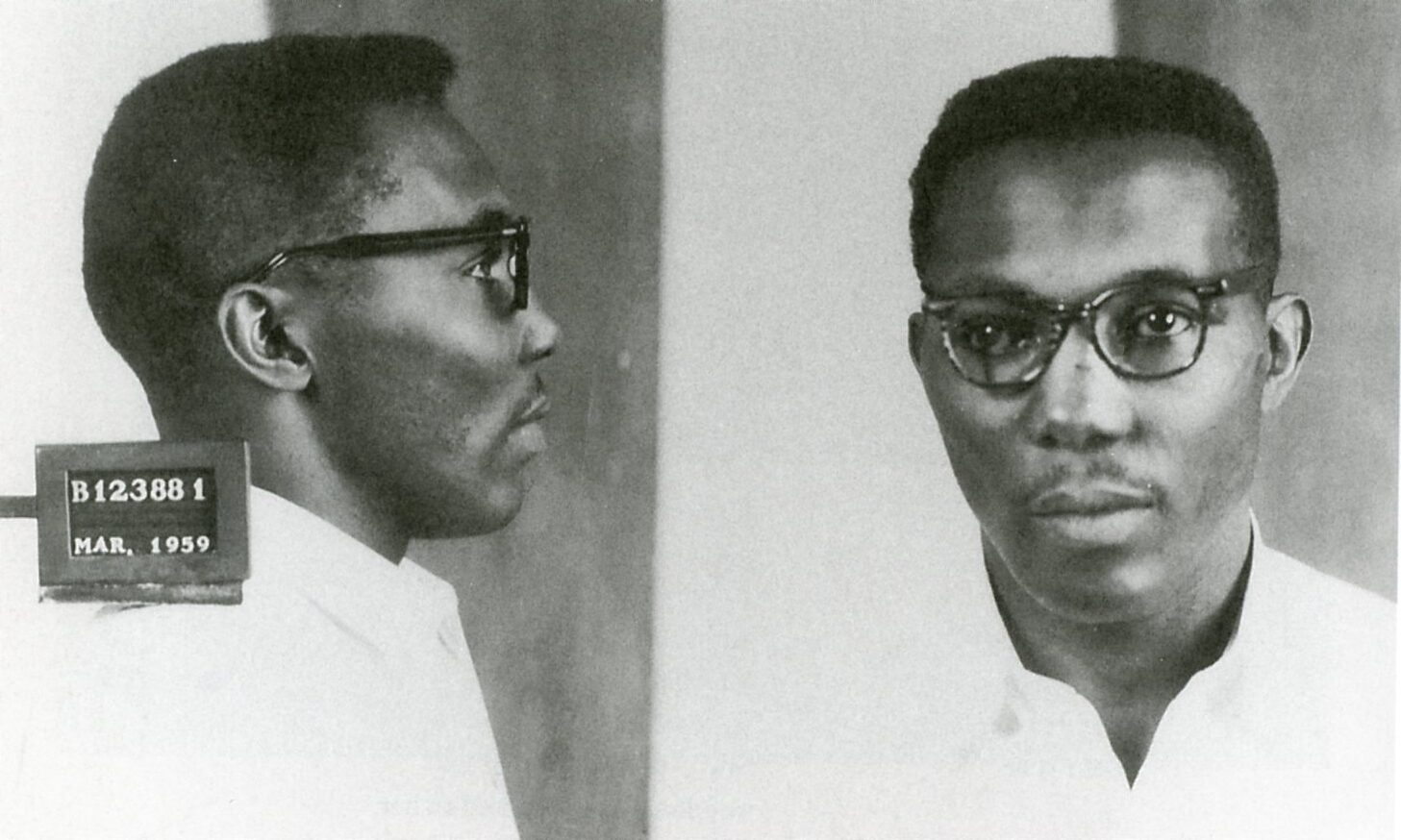
Prisoners: Murder, Mayhem, and Petit Larceny is a collection of seventy portraits of turn-of-the-century prisoners in the town of Marysville, California and the fascinating contemporary newspaper and prison accounts describing the crimes of which they were accused. The photos themselves are more fascinating than most of the crimes. There’s something magical about glass plate negatives that you just can’t reproduce with modern photography.  And I think people just had more character back in the day – or at least it seems that way.

EUGENE ROBAGE

NEWS EPITOMIZED

Deputy Sheriff Anderson arrived from Wheatland last evening and returned this morning with Eugene Robage, where he will answer in Justice Manwell’s court to a charge of petit larceny. He has admitted the theft of some tools from a Horstville barber.  [September 2, 1902]

NEWS EPITOMIZED

Eugene Robage, sentenced to 30 days for petty larceny, was delivered at the county jail by Deputy Sheriff Anderson last evening. [September 3, 1902]


Garretdom!

There’s no racism in this article at all.  None whatsoever.  
HOW HE WAS CUT.

Frederick Steward Tells the Story of a Fight on a Street Corner.

Frederick Steward, a colored man twenty-six years old, whose home is at 1209 Kater street, was admitted to the Pennsylvania Hospital last evening suffering from a wound in the abdomen, received during a quarrel at Eleventh and Locust streets, in which several men were interested.

“‘Twas Abe Scott cut me,” said Steward after his wound was dressed. “Me and Bill Auter had some talk, but it all blowed over, an’ then Abe Scott cum ovah to whar I was an’ he wanted to fight. I told him to ‘way, fur I didn’t want anything to do with him, an’ then Charlie Polk he cum up an’ mashed me in de jaw. While I was attendin’ to him Abe he cums up behind me an’ throwed his arms around me jist so so an’ cut me. Then him and Charlie both run away.”

Auter was arrested and held as a witness but neither Scott nor Polk had been secured up to a late hour last night. The wound is a severe one, but is not considered of a dangerous character by the surgeons, although they were unwilling last night to give an opinion as to the probable result further than that the chances were favorable for his recovery.

Steward is said to be a quiet, peaceable fellow, while neither of his assailants bears a good reputation.

Culled from the collection of The Comtesse DeSpair
1886 Morbid Scrapbook

Here’s another article (from the September 20, 1886 issue of the Philadelphia Times) that presents the story in a less sympathetic light to Mr. Steward:

STABBED ON LOCUST STREET.

One of a Gang of Colored Roughs Receives a Knife-Thrust in the Abdomen.

A gang of colored roughs were standing on the corner of Eleventh and Locust streets last night. One of the number, Abe Scott, who lives in Brier place, offered to fight Frederick Steward, of 1209 Kater street. The latter told his belligerent companion that he didn’t want to fight. Scott, however, became so anxious to show the crowd how Sullivan knocked out Hearld that Steward attempted to walk away. Charles Polk, another one of the loungers, stopped him and called him a coward, and he and Steward clinched. Scott watched the altercation until he saw that Polk was being worsted, and then he sailed in to his assistance. Steward’s back was turned and Scott pulled out a formidable jack-knife and opened the blade. Steward heard the warning cries of his friends, but before he could turn around he received a knife-thrust in the abdomen, which sent him to the ground. A Fifth district officer was seen approaching and the entire gang took to their heels, except William Anter, who lives in Poplar court, and he was arrested on suspicion of having been implicated in the stabbing. Scott and Polk escaped, though the police are looking for them. The injured man was conveyed to the Pennsylvania Hospital. The wound is serious.

I could find no confirmation of whether Steward lived.